
By Aadyaa Keyal
Introduction:
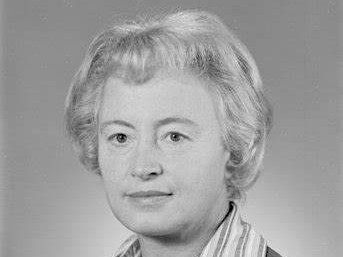
After the beautiful sunset in the evening, don’t we all love looking at the twinkling stars? When you look at the bright moon you then realize how enormous the universe actually is. Think about the planets, galaxies, stars and all the unexplored elements of the sky. Scientists have coined a term for the study of the universe called Astronomy and let’s read about an inspirational woman astronomer Marget Burbidge who fought for opportunities in the field of science for women!
What is an Astronomer?
An astronomer is a scientist who studies the universe and the objects within it. They can work in observational astronomy, using telescopes and cameras to observe astronomical objects, or in theoretical astronomy, using math and computer models to explain observation.
Early Life:
Margaret Burbidge was born on August 12, 1919, in Davenport, England. Her parents were Marjorie and Stanley Burbidge. Her father was an engineer. Margaret showed a keen interest in science and mathematics from an early age. Margaret’s interest in astronomy was sparked by her parents’ encouragement and a family friend, astronomer Henry Norris Russell.
Contributions to Physics:
1. Stellar Nucleosynthesis: Burbidge, along with her husband Geoffrey Burbidge, William Fowler, and Fred Hoyle, proposed the theory of stellar nucleosynthesis. This explained how stars create heavy elements through nuclear reactions in their cores.
2. B2FH Paper: In 1957, Burbidge co-authored the seminal paper “Synthesis of the Elements in Stars” (B2FH). This work revolutionized our understanding of element formation and the life cycles of stars.
3. Galactic Structure and Evolution: Burbidge conducted extensive research on the structure and evolution of galaxies, including our own Milky Way. Her work helped shape our understanding of galaxy formation and evolution.
Key Highlights:
Margaret was the first woman to be appointed director of the Royal Greenwich Observat. Her Greenwich duties did not come with the traditional honorary title of Astronomer Royal, which instead was given to a male astronomer. This was a clear act of discrimination against women in the world of astronomy .Burbidge challenged gender inequality in astronomy. She rejected the Annie J. Cannon Prize, citing its exclusivity to women as perpetuating discrimination. Her bold move sparked the creation of a committee dedicated to advancing women’s roles in astronomy. This courageous move resulted in the establishment of a permanent American Astronomical Society (AAS) committee focused on advancing women’s roles in astronomy.
Obstacles she faced:
As a woman in a male-dominated field, Margaret faced limited opportunities for women in science. She had to deal with sexism and stereotypes throughout her career. Balancing career ambitions with societal expectations decades ago was particularly challenging.
Notable Achievements:
Margaret Burbidge’s notable achievements include co-authoring the seminal work “Quasi-Stellar Objects” (1967) with her husband Geoffrey. Her distinguished career was marked by numerous honors, including election as a Fellow of the Royal Society of London (1964). She held prestigious leadership roles, serving as President of the American Astronomical Society (1976-78) and the American Association for the Advancement of Science (1983). In recognition of her outstanding contributions, Burbidge and her husband jointly received the Royal Astronomical Society’s Gold Medal in 2005.
Conclusion:
Margaret Burbidge, a pioneering astronomer and astrophysicist, died from complications after a fall on April 5, 2020 at her home in San Francisco. She is an underrated physicist who fought for women recognition and was ahead of her time in doing so!
Sources
 BrainBox
Leave a comment